
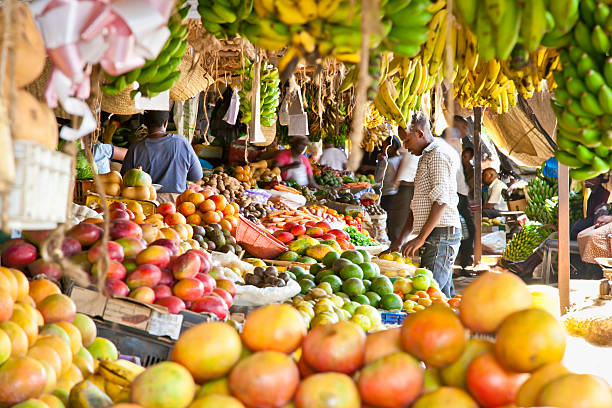
Rural markets represent the next frontier for sustainable business growth across Africa. With approximately 60% of sub-Saharan Africa's population living in rural areas and rapid economic development occurring beyond major cities, brands that effectively engage rural consumers can achieve significant market expansion and long-term competitive advantage. Yet many organizations struggle to develop effective rural marketing approaches, often applying urban-centric strategies that fail to resonate with rural realities.
The Rural Opportunity in Africa
Africa's rural landscape is transforming rapidly, creating significant opportunities for forward-thinking brands:
- Growing Purchasing Power: Rising agricultural productivity and increasing remittances are boosting rural incomes
- Infrastructure Development: Improved roads and electrification are enhancing market connectivity
- Mobile Penetration: Even in remote areas, mobile phone ownership exceeds 65% in many countries
- Financial Inclusion: Mobile money and agency banking are bringing formal financial services to rural communities
- Demographic Dividend: Young, aspirational populations seeking improved quality of life
"Successful rural marketing in Africa doesn't mean simplifying urban approaches—it requires fundamentally different strategies built from the ground up to address unique rural contexts, values, and consumption patterns."
Understanding Rural Marketing Challenges
Effective rural marketing requires acknowledging and addressing several distinctive challenges:
1. Physical Distribution Barriers
The "last mile" challenge remains significant across rural Africa, with dispersed populations, seasonal road access, and limited formal retail infrastructure. These challenges increase distribution costs and complicate consistent market presence, requiring innovative approaches to product availability.
2. Communication Constraints
Traditional mass media often has limited reach in rural areas, while literacy levels and language diversity can restrict the effectiveness of standard communication approaches. Rural consumers also rely heavily on word-of-mouth and direct experience, making traditional advertising less impactful.
3. Income Variability
Rural incomes are often seasonal and unpredictable, tied to agricultural cycles and weather patterns. This creates unique purchasing patterns and value calculations that differ significantly from urban consumers with regular income streams.
4. Cultural Diversity
Rural communities maintain stronger cultural identities and traditional decision-making structures, requiring marketing approaches that respect local customs, authority figures, and community values. Generic messaging that works in urban environments often fails to resonate.
5. Affordability Requirements
Rural consumers frequently have lower disposable incomes and different value calculations, necessitating product adaptations and pricing strategies that deliver affordable entry points while maintaining quality perceptions.
Proven Rural Marketing Strategies for African Markets
Our extensive work across rural markets in East Africa has revealed several highly effective approaches:
1. Community-Based Marketing
Rural consumers make decisions within community contexts, making community engagement essential. Effective approaches include:
- Local Opinion Leader Engagement: Identifying and educating respected community figures who can legitimize products and services
- Community Events: Participatory activities that combine entertainment, education, and product experience
- Group Demonstrations: Shared product experiences that leverage social validation
- Community Support Initiatives: Strategic CSR that addresses real local needs while building brand goodwill
Our community-based campaign for a leading agricultural inputs provider achieved 45% higher adoption rates compared to traditional marketing approaches by working through farmer groups and local extension officers.
2. Experiential Marketing Adaptations
Rural consumers place high value on direct experience and tangible demonstrations:
- Mobile Demonstration Units: Vehicles equipped to showcase products and services in village centers
- Rural Demo Farms: Practical implementation of agricultural products under local conditions
- Market Day Activations: Engaging the natural gathering points in rural commerce
- Before-After Demonstrations: Visible proof of product benefits under local conditions
For a solar home system provider, our experiential marketing program featuring nighttime demonstrations in villages without electricity increased conversion rates by 60% compared to daylight presentations.
3. Strategic Micro-Distribution Networks
Solving the last-mile challenge requires creative distribution approaches:
- Village Entrepreneur Models: Training and equipping local residents as product representatives
- Market Day Distribution: Leveraging existing rural commercial infrastructure
- Mobile Retail: Bringing products directly to dispersed communities
- Community Distribution Points: Partnerships with existing village institutions
Our village entrepreneur program for a fintech client created a network of 2,500+ rural agents, increasing service availability by 300% in previously underserved regions.
4. Appropriate Communication Channels
Effective rural communication strategies leverage accessible media and local contexts:
- Community Radio: Local-language programming with high rural listenership
- Audio Visual Vans: Mobile video units bringing content to village gathering points
- USSD and Voice Services: Phone-based information accessible without smartphones
- Visual Communications: Image-driven messaging that transcends literacy barriers
- Interpersonal Channels: Face-to-face communication through community networks
A community radio campaign for a health insurance provider reached 68% of the target rural population, compared to just 12% reach through national television advertising.
5. Product and Packaging Adaptations
Rural success often requires rethinking products and packaging:
- Sachets and Small Units: Affordable entry points matched to rural cash flow
- Durability Engineering: Products designed for challenging rural conditions
- Multi-functional Design: Features that address multiple rural needs in single solutions
- Appropriate Technology: Solutions matched to rural infrastructure realities
A leading FMCG brand achieved 125% sales growth in rural markets after introducing sachet packaging with extended shelf life suitable for rural retail conditions.
6. Rural Finance Solutions
Addressing rural affordability requires financial innovations:
- Pay-As-You-Go Models: Incremental payment systems aligned with rural income patterns
- Group Purchasing: Leveraging community structures to enable collective buying
- Harvest-Time Payment Schemes: Credit aligned with agricultural income cycles
- Asset-Based Financing: Using productive assets to enable incremental acquisition
A pay-as-you-go model for agricultural equipment increased adoption by 280% compared to traditional financing approaches, by aligning payments with harvest income.
7. Digital Rural Engagement
Mobile technology is creating new rural marketing possibilities:
- Voice-First Services: Audio content and interactive voice response systems
- Community Digital Hubs: Shared access points for digital content
- WhatsApp Groups: Community-based information sharing networks
- Offline Digital Content: Materials that work without consistent connectivity
A WhatsApp-based farmer information service achieved 83% active usage among rural participants, compared to 14% adoption for a similar app-based service requiring continuous internet connectivity.
Case Study: Rural Electricity Adoption Campaign
Our work with Uganda's Rural Electrification Agency demonstrates the impact of integrated rural marketing approaches:
Challenge: Increase electricity connection rates in newly electrified rural communities where awareness was low and connection costs presented barriers to adoption.
Approach:
- Community-based "Electricity Champions" program with local representatives in each target village
- Evening demonstration events showcasing practical electricity benefits
- Connection financing schemes aligned with seasonal income patterns
- Community radio programming addressing electricity myths and highlighting success stories
- Targeted messaging for productive uses of electricity for rural businesses
Results: 185,000+ new connections achieved (62% above target), with 78% of connected households reporting productive use of electricity for income generation activities.
The Future of Rural Marketing in Africa
As rural Africa continues to evolve, several trends are shaping future marketing approaches:
- Rural Digital Acceleration: Increasing smartphone penetration and improving connectivity
- Value Chain Integration: Rural producers becoming more connected to formal markets
- Renewable Energy Expansion: Solar and mini-grid solutions enabling new rural consumption
- Rural Youth Engagement: Young rural consumers with different aspirations and media habits
- Climate Resilience: Products and services addressing changing environmental conditions
Organizations that invest in understanding and engaging rural markets now will establish sustainable competitive advantage as these communities continue their economic transformation. With the right approaches, rural markets offer tremendous growth potential for brands willing to develop truly appropriate strategies rather than simply extending urban marketing approaches.
At Motion Media, our extensive experience in rural marketing across East Africa enables us to develop and implement programs that drive measurable results in even the most challenging market environments. Our integrated approach combines deep cultural understanding with practical solutions that overcome the unique challenges of rural engagement.
rural marketing rural distribution community engagement last mile African markets agricultural marketing market development

leave a comment